Friday, 11 March 2011

19th Feb 2011 Barcelona Day 3 – Eixample Part 3 Sagrada Familia


Sagrada Familia – Europe’s most unconventional church is an emblem to the city. Crammed with symbolism inspired by nature it is Gaudi greatest work, he is buried here within the crypts. Work continues today financed by public donations.

The towers – There is 4 towers on each side of the church rising 100 meters high, however the main dome tower is yet to be complete and due to rise up 10 170 meters high.


Bell Tower – Each of the towers is topped by a Venetian mosaic


The Apse – first part of the church to be completed, stairs here led down into the crypts


The passion Facade – this bleak facade was completed between 1986 and 2000 by artist Joseph Maria Subirachs. A controversial work, its sculptures figures are angular and often sinister.


Main entrance to the passion facade – depicts the suffering and execution of Jesus


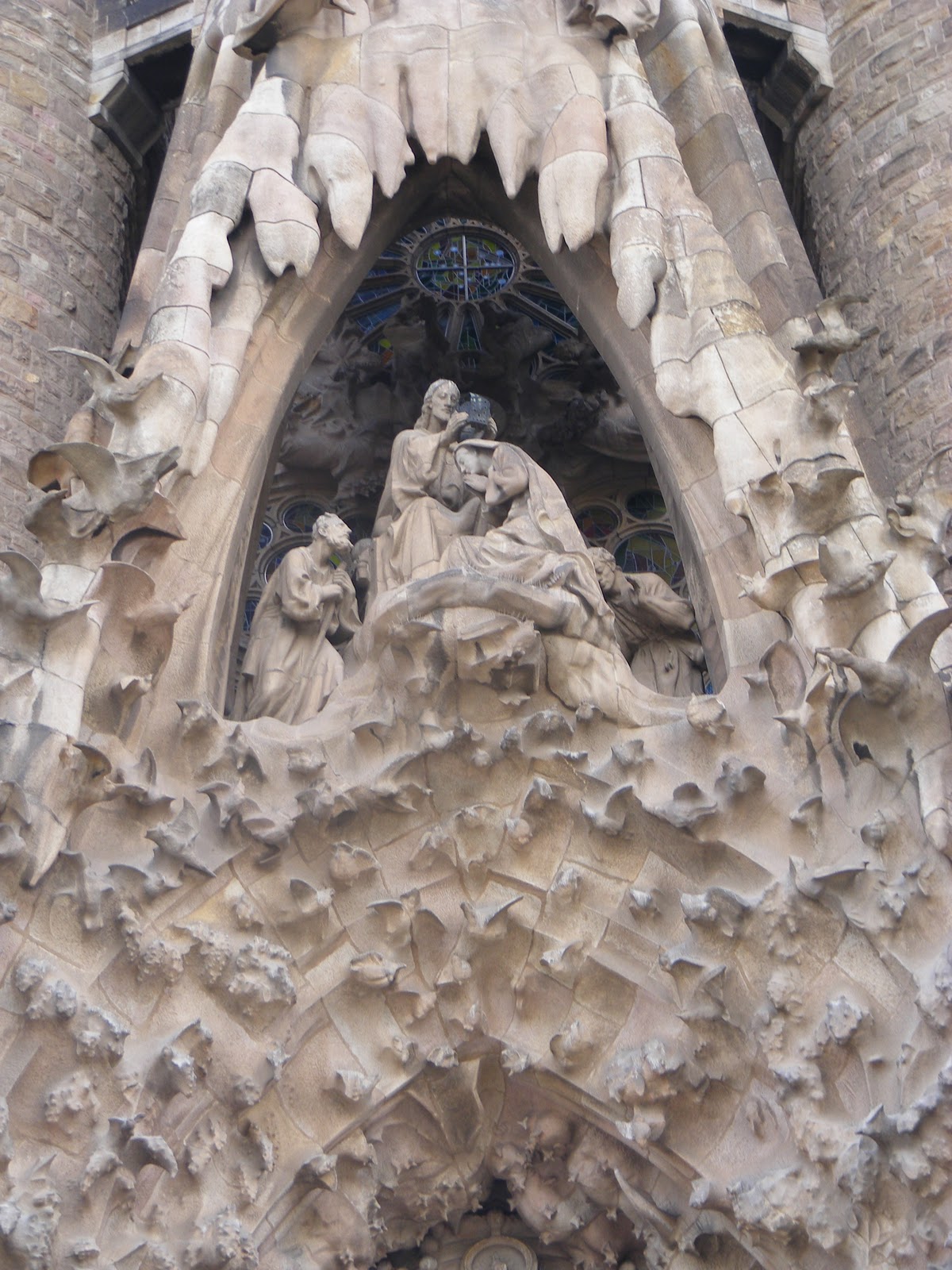
The Nativity Facade – The most complete part of Gaudi’s church, finished in 1930, has doorway which represents Faith, Hope and Charity. Scenes of the Nativity and Christ’s childhood are embellished with symbolism. 


Forest of Columns – the central nave has a forest of columns supporting the structure 


Ornate roof top – each column spread out to join up to the roof of this church


Stained glass windows – are of bright colours in chaotic shapes, only some of the windows have been so far filled but they add much character to the inside.  


Spiral staircase – steep stone steps spiral upwards into the towers and upper viewing galleries


Central Nave – completed in time for a visit from the pope in 2010 this Nave is surrounded by towering columns and brightly coloured stained glass


Walking around: The size of the columns and the church overall can only be appreciated when you compare it to size of person


19th Feb 2011 Barcelona Day 3 – Eixample Part 2

Funfacio Antomi Tapies – publishing art house with a sculpture on the roof entitled cloud and the chair


La Pedrera (Casa Mila) - also known as the stone quarry, this is Gaudi greatest contribution to civic architecture. This building has a curved ripple effect of eight floor apartments around two circular courtyards.  There are no straight walls anywhere in the building. The museum El Espai Gaudi occupies the top floor and allows access to the roof with the witch scares chimney ducts. 

  
Casa Terrades – free-standing six sided apartment block known as the house of the points


Wednesday, 9 March 2011

19th Feb 2011 Barcelona Day 3 – Eixample Part 1 Casa Batllo


Barcelona claims to have the greatest collection of Art Nouveau buildings in Europe, a style referred to here as Modernism, flourished from 1854. The city expansion (eixample) inland is composed of a rigid grid of streets, with the exception of the Diagonal, a main avenue running from the wealthy are of Pedralbes to the sea. 


Casa Batllo – this block of flats involved the conversion of an existing building, its front was reworked in stunning organic forms and its fantastic chimneys and rooftop and finished in 1906. The building is said to symbolise the legend of St George killing the dragon, it is now a world heritage site. The building is open seven days a week between the hours of 9 a.m. and 8 p.m.

The front facade – curved lines dominate the facade, adorned with elements of organic forms


Stairway – modernist expression defines the curved stairway leading to the first floor


Hearth – offers a cosy mushroom shaped corner, with benches by the fireplace


Gallery – curved forms of stone and coloured glass


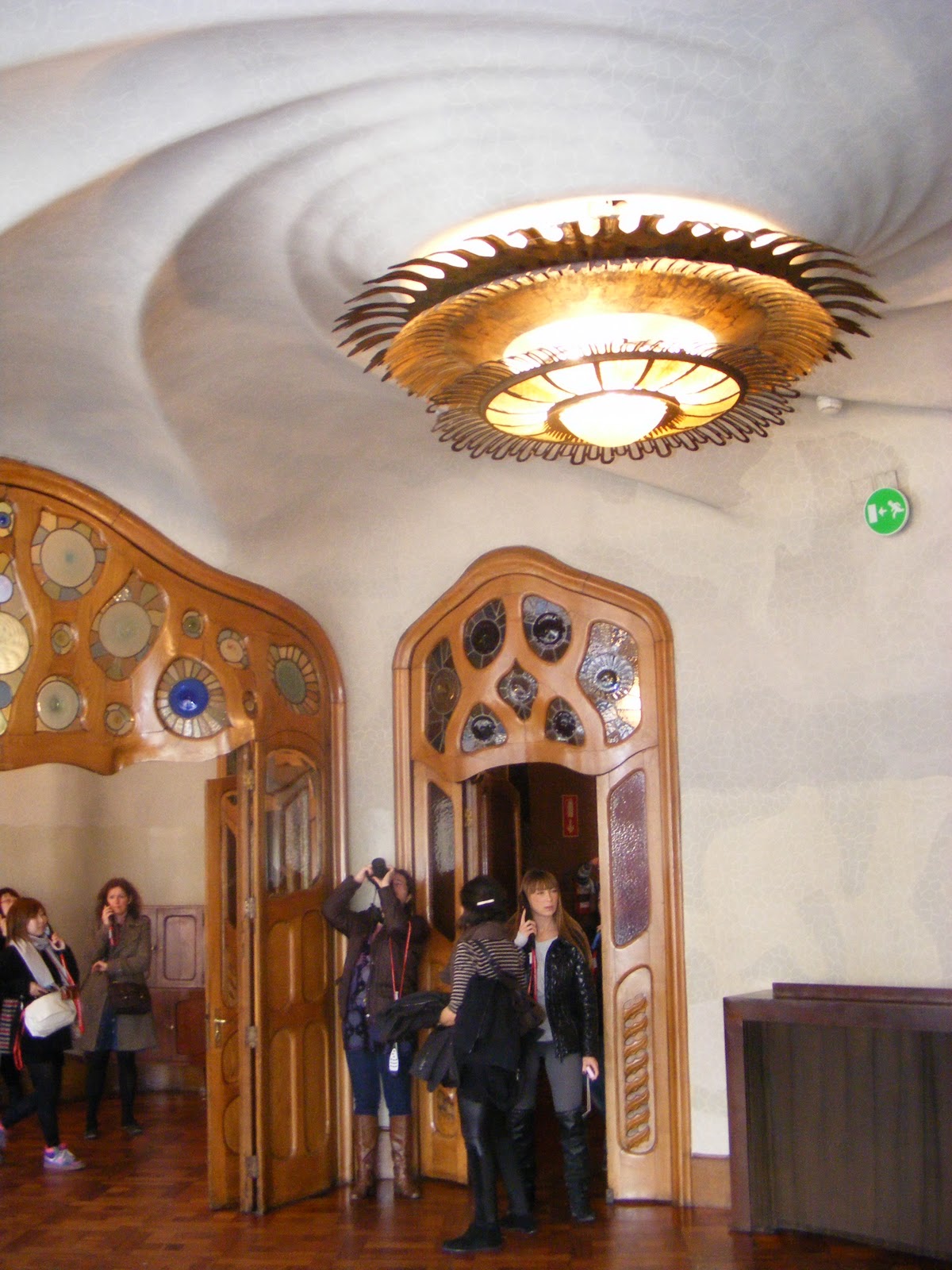
Central gallery light – mix of natural lights through coloured glass and a huge circular light


Garden balcony – the building cured structure can be seen from the rear upon the garden balcony


Skylight – has a watery chromatic graduation, from blue to white, drawing down the light from above


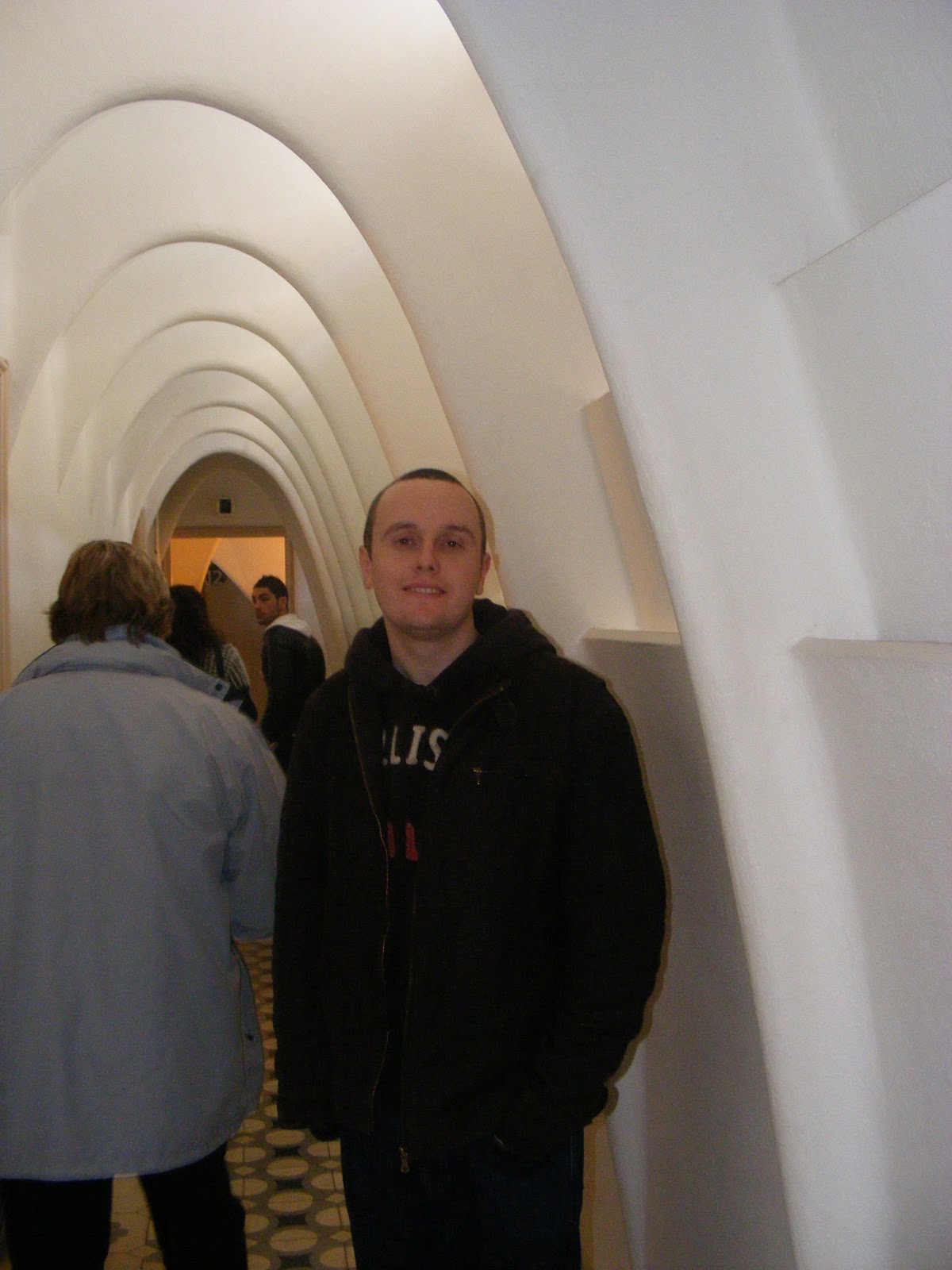
Attic – the arches within this attic are made to look like bones of a rib cage


Roof – has the appearance of the scaly back of a dragon, and is crowded with a bulbous cross and several chimneys


Roof top chimneys – large mosaic structures


  Touring around –